
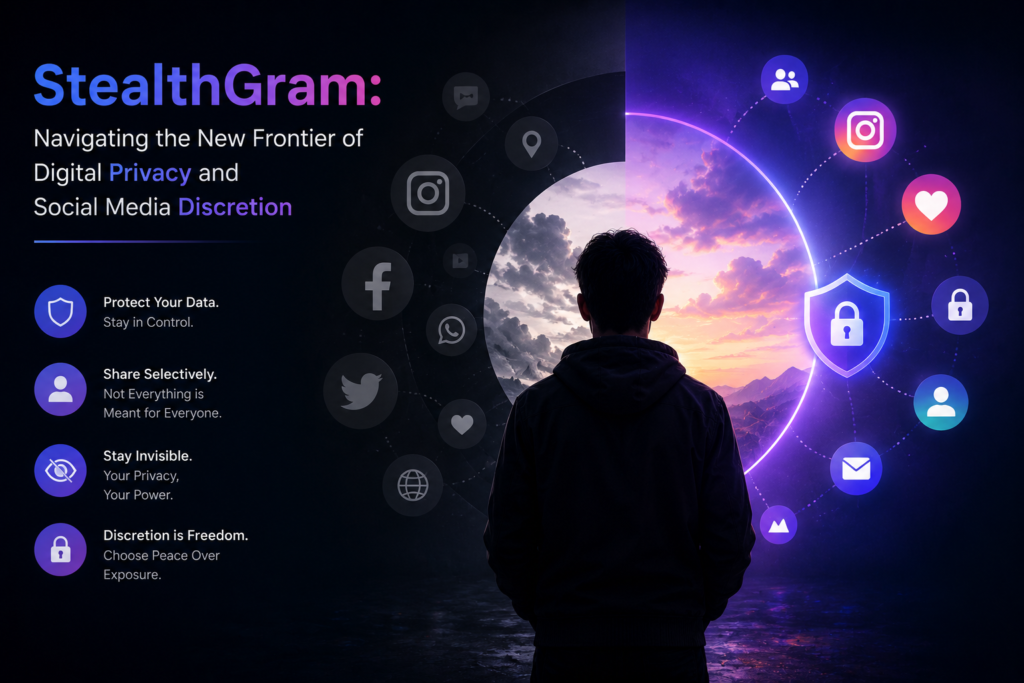

In an era where our digital footprints are often deeper and more permanent than the paths we walk in physical life, the concept of “StealthGram” has emerged as a significant cultural and technical phenomenon. For over a decade, social media platforms have encouraged—and often demanded—radical transparency. We are prompted to share our locations, our meals, our professional milestones, and our private celebrations. However, a counter-movement is brewing. Users are increasingly seeking ways to maintain their social presence without sacrificing their fundamental right to privacy. This shift toward a more guarded, intentional way of interacting with platforms like Instagram is what many now define as the StealthGram approach.
The term itself suggests a paradox: being present yet invisible. It represents a sophisticated evolution in how we perceive online identity. In the early days of social media, “privacy” usually meant a locked profile or a “Close Friends” list. Today, StealthGram encompasses a much broader suite of behaviors and tools designed to bypass the persistent tracking, read receipts, and “seen” statuses that have turned casual browsing into a high-stakes social performance.
The Psychology of Silent Browsing
Why has StealthGram become such a sought-after mode of operation? The answer lies in the psychological fatigue associated with constant connectivity. Every time you view a story, the creator is notified. Every time you send a message, the “seen” notification creates a social debt—the pressure to respond immediately. StealthGram practices alleviate this pressure. They allow individuals to consume content at their own pace, free from the judgment or expectations of others.
This isn’t necessarily about deception; it’s about boundaries. Just as one might browse a bookstore without feeling the need to greet every author on the shelf, StealthGram users want to experience the digital world without leaving a digital trail of breadcrumbs. This “ghost mode” browsing allows for a more authentic consumption of content, where the user’s focus remains on the information or art provided rather than the social consequences of having viewed it.
Technical Implementation and the User Experience
From a technical standpoint, achieving a true StealthGram experience often involves a mix of third-party tools, browser extensions, and strategic settings within the native app. Developers have recognized the demand for discretion, creating interfaces that allow users to view stories anonymously or read messages without triggering the dreaded double-blue checkmark (or its platform-specific equivalent).
By utilizing StealthGram methods, users can bypass the algorithmic “echo chambers” that often dictate what we see. When you browse anonymously, the platform’s data-gathering mechanisms are slightly blinded. They cannot as easily map your interests or your dwell time on specific profiles to sell that data to advertisers. In this sense, StealthGram is as much an act of digital self-defense as it is a social preference. It represents a reclaiming of the user’s data sovereignty.
Key Pillars of the StealthGram Philosophy
To understand how this concept functions in the real world, we can break it down into three primary pillars:
- Anonymous Consumption: The ability to view stories, posts, and highlights without appearing in the “viewed by” list. This is perhaps the most popular aspect of StealthGram, as it allows users to keep up with news or influencers without personal engagement.
- Message Discretion: Reading Direct Messages (DMs) without the sender knowing. This grants the recipient the “luxury of time”—the ability to think through a response before acknowledging receipt of the message.
- Data De-Linking: Using secondary accounts or specialized viewers to ensure that one’s primary identity isn’t tied to every single interaction.
The Ethical Debate: Privacy vs. Transparency
As with any tool that alters social dynamics, the rise of StealthGram has sparked an ethical debate. Critics argue that these tools can be used for “lurking” or “cyber-stalking,” enabling behavior that would be considered intrusive in the physical world. They argue that if you want to see someone’s content, you should be willing to acknowledge your presence.
However, proponents of the StealthGram mindset argue that the platforms themselves created this problem. By gamifying social interactions and making every “view” a metric, platforms have stripped away the casual nature of human curiosity. In a public park, you can watch a street performer without signing a guest book; StealthGram advocates believe the digital world should offer similar levels of public anonymity.
Furthermore, for public figures, journalists, or researchers, StealthGram is an essential tool for “social listening.” It allows professionals to observe trends and public sentiment without their own high-profile identities influencing the discourse or drawing unnecessary attention to their activities.
The Future of Disappearing Footprints
As we look toward the future, it is likely that platforms will continue to play a game of cat-and-mouse with StealthGram developers. We see this already in the way APIs are restricted and third-party apps are frequently shuttered. Yet, the demand remains. As long as users feel over-monitored, they will seek out StealthGram solutions.
We may eventually see a shift where the platforms themselves integrate these features. “Incognito modes” for social media could become as standard as they are for web browsers. This would be a major victory for the StealthGram movement, signaling a move away from “forced engagement” and toward “consensual visibility.”
Conclusion: Reclaiming the Digital Self
Ultimately, the phenomenon of StealthGram is a symptom of a larger cultural realization: our data is valuable, and our attention is finite. By choosing to navigate social media through a more discreet lens, users are making a statement about their own agency. They are deciding when to be seen and when to remain in the shadows.
Whether you use StealthGram techniques to avoid social anxiety, protect your professional reputation, or simply browse the latest trends without being bombarded by targeted ads, the underlying motivation is the same. It is the desire to move through the digital world with the same freedom and anonymity we once took for granted in the physical one. In the end, StealthGram isn’t just about hiding; it’s about the freedom to choose your own level of presence in an increasingly loud world.







Pingback: StealthGram: Beyond Story Viewing & Pro Features Guide
Pingback: StealthGram vs. Incognito Mode: Which Offers Real Privacy?