
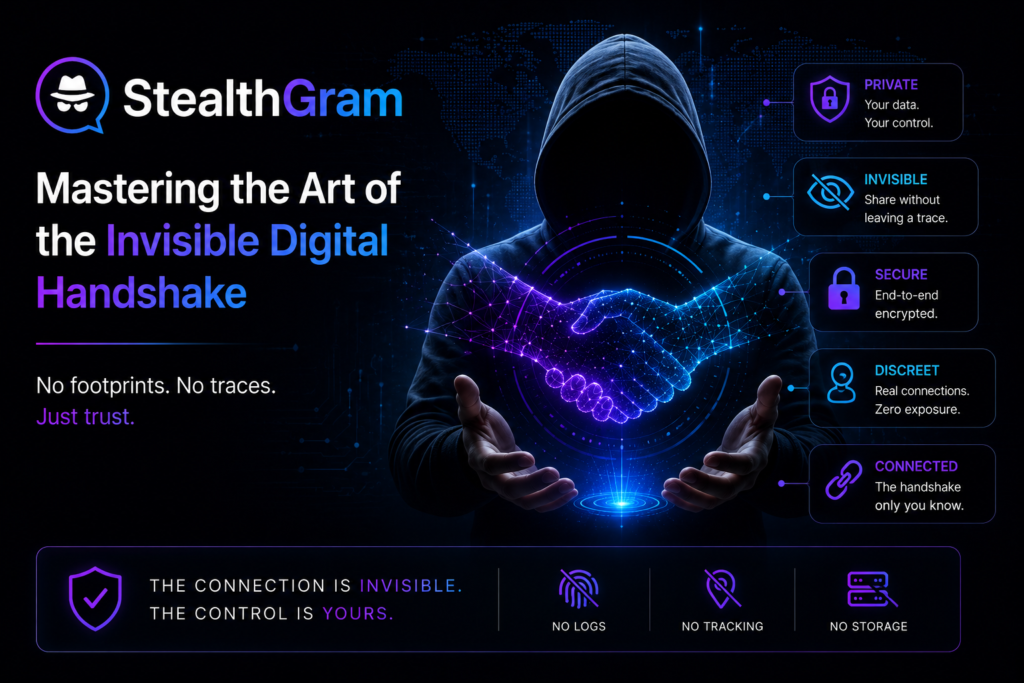

In the modern digital landscape, the concept of “being seen” has transformed from a social validation into a persistent form of surveillance. For years, the major social media platforms have operated on a model of radical transparency, where every interaction is logged, timed, and broadcasted to the content creator. This environment has given rise to StealthGram, a philosophical and technical movement centered on reclaiming the right to observe without being observed. It represents a fundamental shift in how we perceive our digital autonomy, moving away from a performance-based identity toward one of quiet, intentional consumption.
The essence of the StealthGram approach is not rooted in a desire for deception, but rather in a pursuit of psychological peace. In the early days of the internet, browsing was a private activity. You could visit a website, read an article, or look at a photo gallery without the “owner” of that content receiving a notification of your presence. Today, social media has stripped that anonymity away. By adopting a StealthGram mindset, users are attempting to restore that original sense of freedom, allowing them to engage with the world’s digital creativity without the social tax of an immediate, tracked response.
The Architecture of Discretion
What exactly defines a StealthGram user? It isn’t just one specific app or a single hack; it is a holistic strategy for digital interaction. At its core, this movement relies on three distinct layers of operation:
- Passive Observation: The ability to view stories and live broadcasts without appearing in the viewer list. This allows users to stay informed about their social circles or industry trends without the pressure of “reciprocal engagement.”
- Temporal Control: Breaking the “Read Receipt” cycle. By using StealthGram techniques to read messages without triggering a notification, users regain control over their own time. They can choose when to respond based on their schedule, rather than responding out of a sense of obligation triggered by a timestamp.
- Algorithmic Insulation: Standard browsing profiles the user for advertisers. A true StealthGram setup often utilizes external viewers or sandboxed environments that prevent the platform’s algorithm from building a hyper-specific psychological profile of the user based on their dwell time.
Why Privacy is the New Luxury
In a world where attention is the primary currency, the ability to withhold that attention—or at least to hide the tracks of it—has become a luxury. We are living through an “Attention Economy,” where platforms are designed to keep us in a state of constant, high-arousal interaction. The StealthGram phenomenon is a direct rejection of this design. It acknowledges that sometimes, we want to look at a friend’s travel photos or an artist’s process without wanting to “engage” in a formal sense.
Psychologically, the “seen” feature and the “story view” list act as a form of social pressure. If you see a friend’s story but don’t “like” it or reply, there is an implicit social friction. StealthGram removes this friction. It allows for a more relaxed, authentic way of staying connected. You are no longer performing the role of “The Follower”; you are simply an observer, free to appreciate content on its own merits.
Navigating the Ethics of the “Ghost”
Of course, the rise of StealthGram brings up significant ethical questions. Critics often equate invisibility with “stalking” or “lurking,” suggesting that if someone shares content publicly, they have a right to know who is looking at it. They argue that social media is a two-way street—a digital conversation that requires mutual presence.
However, the StealthGram community views this differently. They argue that “public” should mean truly public. If you post a billboard on a highway, you don’t get a list of every driver who looked at it. If you publish a book, you don’t know who is reading it in their living room at 2:00 AM. By enforcing visibility, social media platforms have created an artificial social environment that doesn’t mirror real-world privacy. StealthGram is simply a tool to bring digital interaction back in line with human nature.
The Technical Cat-and-Mouse Game
Achieving a StealthGram level of privacy is a moving target. Social media giants are constantly updating their APIs and security protocols to ensure that users remain “trackable.” This has led to a fascinating ecosystem of independent developers who create workarounds, browser extensions, and mirror sites.
These developers often operate in the shadows themselves, providing services that allow for anonymous story viewing or message ghosting. While these tools vary in their longevity, the sheer volume of users seeking out StealthGram capabilities shows that the market for privacy is massive. It suggests that users are tired of being the product and are looking for ways to use these platforms on their own terms.
Beyond the Screen: A Cultural Shift
As we look toward the next decade of digital life, StealthGram may move from a niche workaround to a mainstream expectation. We are already seeing “Incognito” modes becoming standard in browsers and search engines. It is only a matter of time before users demand a “Ghost Mode” for social interaction as well.
This shift would represent a maturing of the internet. We are moving past the “wild west” phase of oversharing and into a more sophisticated era of digital boundaries. Adopting a StealthGram approach is a sign of digital literacy. it shows that the user understands how their data is being used and is taking proactive steps to guard their mental space and their personal history.
Conclusion: The Power of the Invisible
The story of StealthGram is ultimately a story about power. For a long time, the power has been entirely in the hands of the platforms and the creators. They decided what you saw, how you saw it, and how your viewing was reported. By embracing the StealthGram philosophy, the power shifts back to the individual.
It is the power to be curious without being judged. The power to be informed without being tracked. And most importantly, the power to be alone even when you are “online.” In an age of noise, the quietest users—the StealthGram practitioners—may be the ones who are truly finding balance in the digital world. They prove that you don’t have to leave the party to find a moment of peace; you just have to learn how to walk through the room without making a sound.






Pingback: StealthGram: Complete Guide to Instagram Story Viewing
Pingback: StealthGram: Beyond Story Viewing & Pro Features Guide