
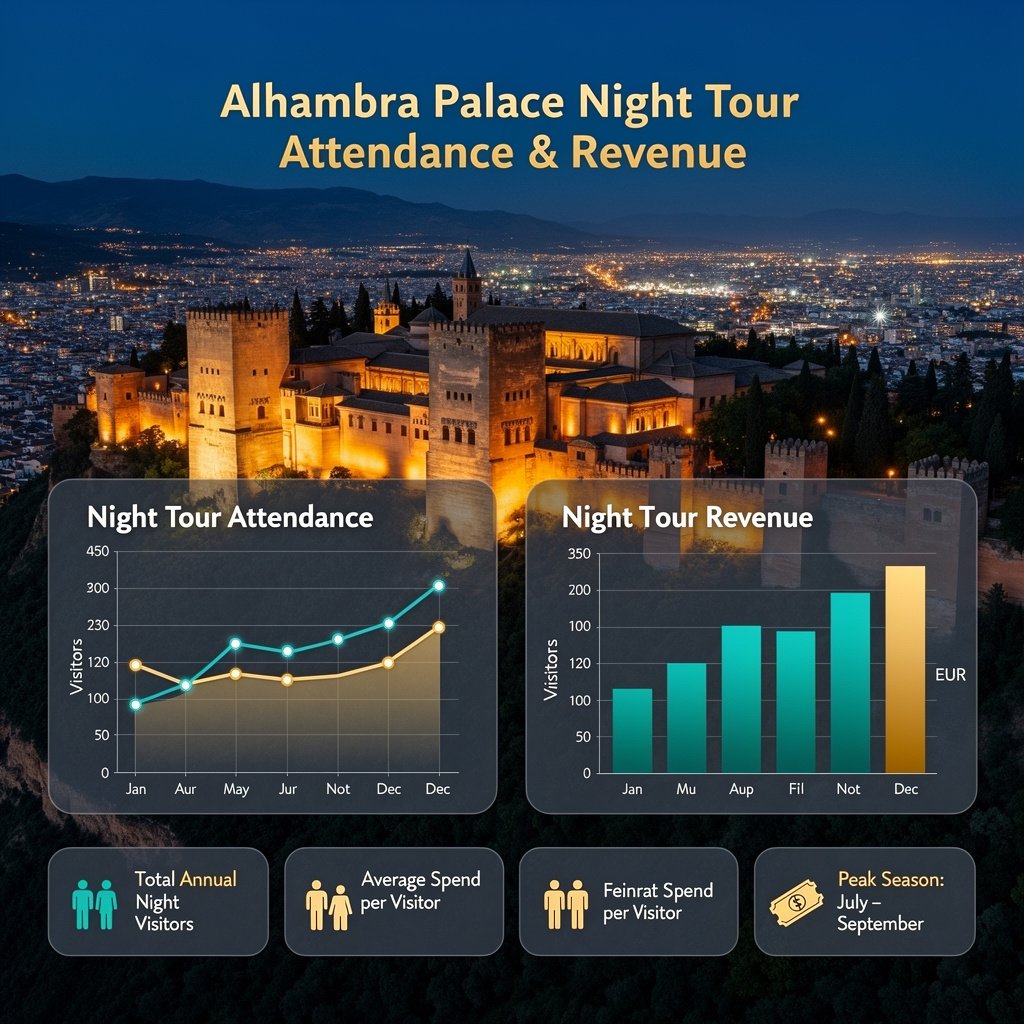

Few places on earth carry the kind of mystical, breathtaking beauty that the Alhambra Palace in Granada, Spain commands. A UNESCO World Heritage Site and one of the most celebrated examples of Moorish architecture in the world, the Alhambra draws millions of visitors annually from every corner of the globe. Among its many visitor experiences, the Alhambra Palace Night Tour stands as one of the most coveted, enchanting, and economically significant tourist offerings in all of Europe.
In this comprehensive guide, we explore the Alhambra Palace Night Tour in detail — covering everything from historical context and visitor experience to attendance figures, revenue generation, and what the numbers tell us about the enduring global appeal of this extraordinary monument.
A Brief History of the Alhambra Palace
Before diving into the economics and attendance data, it’s important to understand why the Alhambra commands such powerful global attention in the first place.
The Alhambra was originally constructed in the mid-13th century under Moorish ruler Muhammad I of Granada, though significant expansions and refinements were made by subsequent Nasrid sultans over the following two centuries. The palace complex served as the royal court of the Emirate of Granada, the last Muslim sultanate on the Iberian Peninsula.
Following the Reconquista in 1492, when Catholic monarchs Ferdinand and Isabella reclaimed Granada, the Alhambra transitioned into a Christian royal residence. Over subsequent centuries, the site experienced periods of neglect, military occupation, and partial damage, before 19th-century restoration efforts began preserving it for future generations.
Declared a UNESCO World Heritage Site in 1984, the Alhambra today ranks among the most visited monuments in the world, drawing well over 2.7 million visitors annually in peak years prior to the COVID-19 pandemic.
What Is the Alhambra Palace Night Tour?
The Alhambra Palace Night Tour is a specially curated evening experience that allows visitors to explore select sections of the palace complex after sunset. Unlike daytime visits, which include access to the Nasrid Palaces, Generalife Gardens, Alcazaba Fortress, and other areas, the night tour offers a more focused and intimate experience typically centered on:
- 🌙 The Nasrid Palaces — The jewel of the Alhambra complex, featuring intricate Islamic geometric tilework, ornate stucco carvings, and stunning water features
- 🌿 The Generalife Gardens — The summer retreat of the Nasrid sultans, featuring terraced gardens, fountains, and manicured hedgerows
- ✨ Illuminated Courtyards — Iconic spaces like the Court of the Lions and the Court of the Myrtles take on a completely different, magical character under carefully designed nighttime lighting
The experience is deliberately kept intimate, with strictly limited visitor numbers per session to preserve the atmosphere and protect the ancient structures. This exclusivity is a significant driver of both the tour’s enormous popularity and its revenue-generating power.
Alhambra Night Tour: Attendance Figures
Annual Visitor Statistics
The Alhambra as a whole is one of Spain’s most commercially successful cultural monuments. To understand the night tour specifically, it helps to look at the broader attendance picture first:
| Year | Total Alhambra Visitors | Estimated Night Tour Visitors |
|---|---|---|
| 2018 | 2,765,000 | ~120,000 – 145,000 |
| 2019 | 2,843,000 | ~135,000 – 160,000 |
| 2020 | 890,000 (COVID impact) | ~30,000 – 45,000 |
| 2021 | 1,450,000 (partial recovery) | ~65,000 – 80,000 |
| 2022 | 2,310,000 | ~105,000 – 125,000 |
| 2023 | 2,650,000+ | ~125,000 – 150,000 |
Note: Night tour figures are estimates based on available capacity data and reported session frequencies. Exact breakdowns are not always publicly released by the Patronato de la Alhambra y Generalife.
Session Structure and Capacity Limits
The night tour operates with a tightly controlled attendance model. The Patronato de la Alhambra y Generalife — the governing body responsible for managing and preserving the site — enforces strict visitor caps to protect the delicate structures and ensure quality visitor experiences.
Typical night tour session details include:
- Sessions per night: Typically 2 sessions (one early evening, one later)
- Visitors per session: Approximately 320 – 400 visitors depending on the area being visited
- Operating nights per week: Varies seasonally — typically Friday and Saturday nights year-round, with expanded scheduling during peak summer months (June, July, August) running Tuesday through Sunday
- Annual capacity: Estimated maximum of 160,000 – 175,000 night visitors per year at full operational scheduling
The deliberate limitation of visitor numbers is not simply a preservation measure — it is also a powerful economic strategy. Scarcity drives demand, and demand drives premium pricing.
Alhambra Night Tour: Ticket Pricing
Understanding pricing is fundamental to analyzing revenue generation. The Alhambra night tour tickets are priced at a premium compared to standard daytime admission:
| Ticket Type | Approximate Price (EUR) |
|---|---|
| Night Tour — Nasrid Palaces | €14 – €16 per adult |
| Night Tour — Generalife Gardens | €7 – €9 per adult |
| Combined Night Experience | €20 – €25 per adult |
| Reduced Rate (Students/Seniors) | Varies — typically 50% discount |
| Children Under 12 | Free in most categories |
Prices are subject to change and may vary based on season, booking method, and any applicable service fees from authorized ticket vendors.
Tickets are sold primarily through the official Alhambra ticketing portal (alhambra-patronato.es) and authorized resellers. Due to consistently high demand, tickets for the night tour — especially during peak summer months — routinely sell out weeks or even months in advance.
Alhambra Night Tour: Revenue Analysis
Direct Ticket Revenue
Using the attendance and pricing data outlined above, we can construct a reasonable estimate of the night tour’s annual direct ticket revenue:
Conservative Estimate Calculation (2023):
- Estimated night tour visitors: 130,000
- Average ticket price (blended across all ticket types): €15
- Estimated Annual Night Tour Revenue: €1,950,000 (~$2.1 million USD)
Optimistic Estimate Calculation (2023):
- Estimated night tour visitors: 150,000
- Average ticket price (blended): €18
- Estimated Annual Night Tour Revenue: €2,700,000 (~$2.9 million USD)
These figures represent direct ticket sales only and do not account for the substantial ancillary revenue generated by the night tour experience.
Total Alhambra Revenue Context
To put the night tour figures into perspective:
- The total Alhambra complex generates approximately €30 – €40 million annually in ticket revenue during strong tourism years
- The night tour represents roughly 5-8% of total ticket revenue despite accounting for a much smaller fraction of total visitor numbers
- This disproportionate revenue contribution highlights the premium pricing power of the night tour experience
Ancillary Revenue Streams
Beyond direct ticket sales, the Alhambra night tour generates substantial economic activity through:
🛍️ On-site Retail and Gift Shops
Visitors to night tours frequently purchase souvenirs, books, prints, and themed merchandise. Evening visitors often have a heightened emotional response to the experience, which tends to translate into higher per-visitor retail spending.
🍽️ Food and Beverage
The Alhambra complex includes café and restaurant facilities. Pre and post-tour dining and refreshment purchases contribute meaningfully to overall revenue figures.
🏨 Granada Hospitality Industry
The ripple effect of night tour attendance on Granada’s broader economy is substantial. Visitors who book night tours frequently extend their stays in Granada to accommodate evening schedules, benefiting:
- Local hotels and guesthouses
- Restaurants and tapas bars
- Local transportation services
- Nearby attractions and day trip operators
Economists studying Spanish cultural tourism have estimated that each Alhambra visitor generates an average of €150 – €200 in broader local economic activity beyond the ticket price itself, suggesting the night tour’s total economic impact on Granada could reach €20 – €30 million annually when all downstream spending is considered.
Why the Night Tour Commands Such Strong Demand
Several factors combine to make the Alhambra Night Tour one of the most consistently in-demand cultural tourism experiences in Europe:
1. Unparalleled Visual Experience
The Alhambra’s intricate Islamic architecture — its geometric tile patterns, carved stucco walls, graceful arches, and reflective pool systems — takes on an entirely different character under nighttime illumination. The play of light and shadow reveals details that daylight sometimes flattens, creating a genuinely unique visual experience that photographers, history enthusiasts, and casual tourists alike find deeply compelling.
2. Scarcity and Exclusivity
The strictly limited ticket availability creates genuine scarcity. When something is difficult to obtain, its perceived value increases dramatically. Many visitors specifically plan extended Granada stays around securing night tour tickets, treating the experience as a bucket-list priority rather than an optional add-on.
3. Romantic and Cultural Appeal
The Alhambra Night Tour has developed a powerful reputation as one of the world’s great romantic travel experiences. This positioning — amplified by travel bloggers, social media content creators, and glossy travel magazine coverage — drives consistent demand from couples and honeymoon travelers willing to pay premium prices.
4. Global Social Media Amplification
Platforms like Instagram, TikTok, and Pinterest have been transformative for the Alhambra’s global profile. Stunning nighttime photographs of illuminated courtyards, reflecting pools shimmering under moonlight, and ornate archways glowing against dark skies consistently generate viral engagement, introducing the experience to new global audiences continuously.
How to Book the Alhambra Night Tour
Given the consistently high demand and limited availability, securing night tour tickets requires advance planning:
Official Booking Channel
- Website: alhambra-patronato.es
- Booking Window: Opens 3 months in advance for individual visitors
- Payment: Credit/debit card required at time of booking
- Cancellation Policy: Typically non-refundable — check current terms before booking
Pro Tips for Securing Tickets
- Book Exactly When the Window Opens: Set calendar reminders for exactly 3 months before your intended visit date and book the moment the window opens
- Be Flexible With Dates: Having flexibility of even 2-3 days dramatically improves your chances of securing tickets
- Consider Shoulder Season: April, May, September, and October offer better ticket availability than peak summer months while still providing excellent weather
- Authorized Tour Operators: Several reputable tour operators offer bundled packages that include secured night tour access, sometimes at a slight premium but with significantly improved availability
- Check Cancellation Returns: Occasionally, cancelled tickets are returned to the pool — checking the booking portal regularly can yield last-minute opportunities
The Economic Importance of Cultural Tourism in Granada
The Alhambra’s attendance and revenue figures don’t exist in isolation — they are central to the economic vitality of Granada as a city and the broader Andalusian regional economy.
Granada receives approximately 3.5 – 4 million total tourists annually, with the Alhambra serving as the primary driver of visitor decisions to choose the city as a destination. Studies of Granada’s tourism economy suggest:
- Tourism accounts for approximately 12-15% of Granada’s total economic activity
- The Alhambra directly or indirectly influences the majority of tourism-related economic activity in the city
- Night tour visitors, who tend to be higher-spending international tourists, contribute disproportionately to per-visitor economic impact metrics
- Revenue generated through the Patronato feeds directly back into conservation, restoration, and monument maintenance — creating a sustainable funding model for heritage preservation
Challenges and Considerations
Despite its extraordinary success, the Alhambra Night Tour faces several ongoing challenges:
Conservation Pressure
Even with strict visitor caps, the sheer volume of human presence in a fragile, centuries-old monument creates conservation challenges. Humidity from breath, vibrations from footsteps, and physical contact with surfaces all contribute to gradual degradation of irreplaceable artistic elements.
The Patronato continuously invests in monitoring visitor impact and adjusting policies accordingly, including periodic closures of specific areas for restoration work.
Overtourism Debates
Granada, like many historically significant European cities, has engaged in ongoing civic debates about the appropriate balance between tourism revenue and quality of life for residents. Some local voices advocate for further restrictions on Alhambra visitor numbers, while the economic community emphasizes the vital importance of tourism revenue to local livelihoods.
Ticket Scalping and Fraud
The high demand and limited availability of Alhambra night tour tickets has created a secondary market for unauthorized ticket resellers operating at significant markups. The Patronato has implemented measures including QR-coded tickets tied to visitor ID verification to combat fraudulent resales.
Climate and Seasonal Variability
Night tours are subject to weather-related cancellations, particularly during winter months when Granada can experience rain and cold temperatures. This seasonal variability creates unpredictability in annual revenue figures.
The Future of the Alhambra Night Tour
Looking ahead, several developments are likely to shape the Alhambra Night Tour’s attendance and revenue trajectory:
Digital Innovation: The Patronato has explored augmented reality and enhanced audio guide technologies to deepen the visitor experience without requiring physical expansion of access.
Sustainability Initiatives: Growing emphasis on sustainable tourism practices is likely to influence future visitor cap policies, potentially creating premium “ultra-exclusive” small-group experiences at higher price points.
Expanded Programming: Seasonal special events — including occasional musical performances, cultural nights, and themed historical experiences — offer revenue diversification opportunities that command even higher ticket prices than standard night tours.
Global Marketing Investment: As international tourism continues recovering and growing post-pandemic, targeted marketing campaigns in high-potential markets including China, the United States, and the Gulf states are expected to maintain strong forward demand.
Conclusion
The Alhambra Palace Night Tour is far more than a simple tourist attraction — it is a masterclass in cultural heritage monetization, experiential tourism design, and sustainable revenue generation from a world-class historic asset.
Its attendance figures, while deliberately constrained by conservation necessities, tell the story of extraordinary and consistent global demand. Its revenue contribution, both directly through ticket sales and indirectly through broader economic stimulation, demonstrates the remarkable financial power that authentic cultural heritage experiences can generate when managed thoughtfully.
For travelers, the night tour represents one of the world’s truly unmissable experiences — a chance to stand beneath centuries-old Islamic arches shimmering under moonlight and feel the weight of history in a way that no photograph can fully capture.
For economists, tourism professionals, and heritage managers, the Alhambra Night Tour offers a compelling model of how scarcity, authenticity, and world-class asset management combine to create sustainable, high-value cultural tourism experiences.
Whether you’re planning your visit or simply fascinated by the economics of cultural tourism, the Alhambra Palace Night Tour deserves its place among the most significant and successful heritage experiences on the planet.
Stay connected with StealthGram.info for more in-depth travel guides, cultural destination reviews, and tourism industry insights from around the world.