
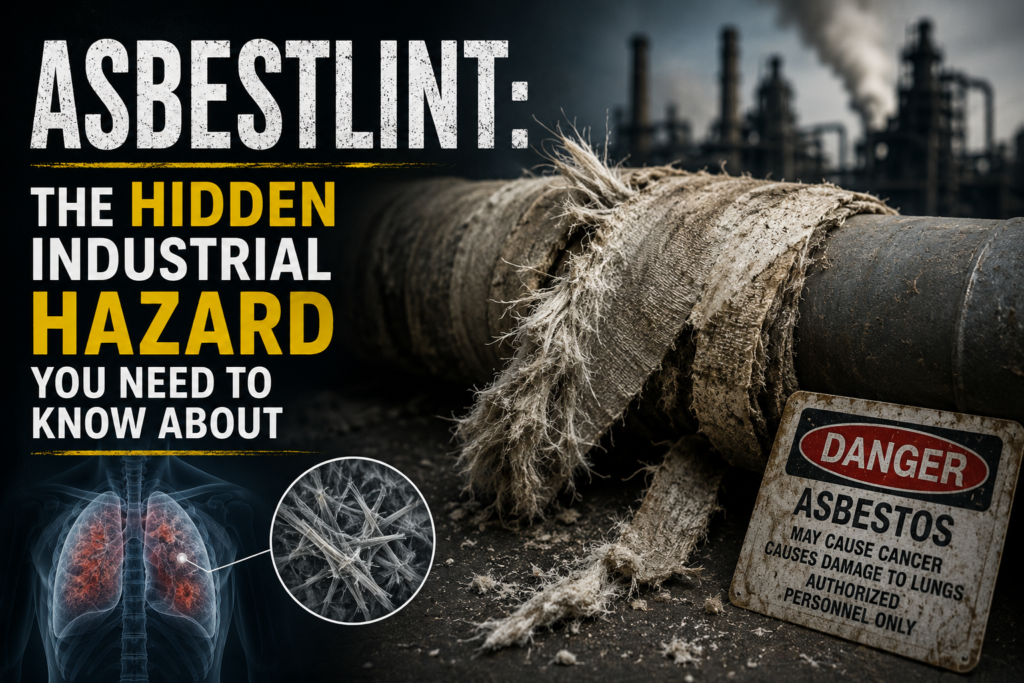

Asbestlint is a fine, fibrous particulate byproduct that combines characteristics of asbestos (a known carcinogenic mineral fiber) and lint (microfibers from textile wear). Unlike traditional asbestos which is deliberately mined and used for heat resistance, Asbestlint is typically unintentional—formed through mechanical erosion, friction-based wear, or degradation of layered composite materials in industrial systems.
What Exactly Is Asbestlint?
To understand Asbestlint, you first need to grasp what asbestos is. Asbestos is a naturally occurring mineral made up of flexible fibers resistant to heat, electricity, and corrosion. Because of these properties, it was widely used in construction, insulation, automotive, and shipbuilding industries throughout the 20th century.
Asbestlint refers to tiny, lint-like particles made up of or contaminated with asbestos fibers. These particles often accumulate where asbestos-containing materials (ACMs) are present or have deteriorated. Unlike visible asbestos sheets or insulation boards, Asbestlint is much finer and lighter, making it more likely to become airborne and inhaled.
Key Physical Characteristics
What distinguishes Asbestlint from typical dust or fiber accumulation is its morphology and durability:
| Property | Asbestlint |
| Structure | Fibrous, elongated, needle-like under microscopy |
| Size | Typically 5 microns long, thinner than 3 microns |
| Combustion | Low combustion point (textile-based fibers) |
| Surface | Hydrophobic (resists water-based cleanup) |
| Adhesion | Electrostatic (increases airborne drift risk) |
| Persistence | Non-biodegradable, chemically persistent |
Samples from affected industrial plants show complex mixtures of silicates, carbon particles, metallic oxides, and synthetic polymer threads.
Health Risks: Why Asbestlint Is Dangerous
These fibers become particularly hazardous when they remain airborne, entering lungs during normal breathing—especially in unventilated or poorly maintained environments.
How It Damages Your Body
Fibers longer than 5 microns and thinner than 3 microns (standard dimensions in Asbestlint samples) can bypass natural respiratory defenses, lodging deep in the alveoli. Exposure triggers inflammatory lung responses similar to those seen in asbestos-exposed populations.
Comparison to Other Fibers
| Property | Asbestlint | Asbestos | Microplastic Fibers |
| Origin | Synthetic/mineral composite | Natural mineral silicate | Synthetic (plastic) |
| Inhalation Risk | High | Very High | Low to Moderate |
| Carcinogenic Status | Suspected | Confirmed (Group 1) | Under investigation |
| Regulation | Limited | Highly regulated | Emerging oversight |
| Persistence | High | High | Extremely high |
| Cleanup Complexity | Moderate to High | Very High | Moderate |
Where Does Asbestlint Form?
Asbestlint accumulates in places where asbestos-containing materials are present or deteriorating:
- Older factories and manufacturing facilities
- Industrial systems with mechanical erosion or friction
- Textile processing plants handling heat-resistant textiles
- Legacy infrastructure with asbestos-insulated systems
- Poorly ventilated environments where fibers remain airborne
The Regulatory Gray Zone
One of the most troubling aspects of Asbestlint is that it exists in a regulatory vacuum. While agencies like OSHA and NIOSH set standards for airborne particulates and established asbestos categories, Asbestlint often falls between regulatory definitions—being neither purely synthetic nor purely mineral.
Currently, Asbestlint is not formally classified as a hazardous material by most regulatory bodies. However, due to its fiber structure, respirability, and chemical persistence, many occupational health experts consider it a potential hazard that warrants preventive action and further study.
If you are looking best SEO link building agencies vist: SEO Link Building Agency
Why Asbestlint Remains Relevant Today
Although modern industries are shifting to safer materials, Asbestlint hasn’t completely disappeared:
- Legacy Infrastructure: Many old factories still rely on asbestos-insulated systems
- Cost Efficiency: In some countries, it remains a low-cost solution where regulations allow
- Thermal Resistance: It offers unmatched performance in temperatures exceeding 1000°C
Best Practices for Prevention and Safety
Recognizing the risks associated with Asbestlint, identifying its presence, and implementing appropriate control measures are crucial steps in ensuring a safe workplace:
- Monitor airborne particulates in industrial environments
- Improve ventilation to reduce airborne fiber concentration
- Use appropriate respiratory protection when working in affected areas
- Implement specialized cleanup protocols (water-based methods are ineffective due to hydrophobic nature)
- Regularly inspect legacy equipment and insulation for degradation
Final Thoughts
While it may be a lesser-known term today, Asbestlint represents a very real hazard in specific industrial and construction environments, particularly in older structures and manufacturing facilities. Its fine, dust-like nature makes it easy to overlook but potentially harmful to those exposed.
Asbestlint sits at a dangerous intersection between legacy pollution and emerging contaminants, warranting greater scientific and regulatory attention. As environmental health awareness continues to grow, it’s likely that Asbestlint will become an increasingly discussed topic in industrial hygiene and safety circles.








Pingback: Gothic Flowers: A Complete Guide