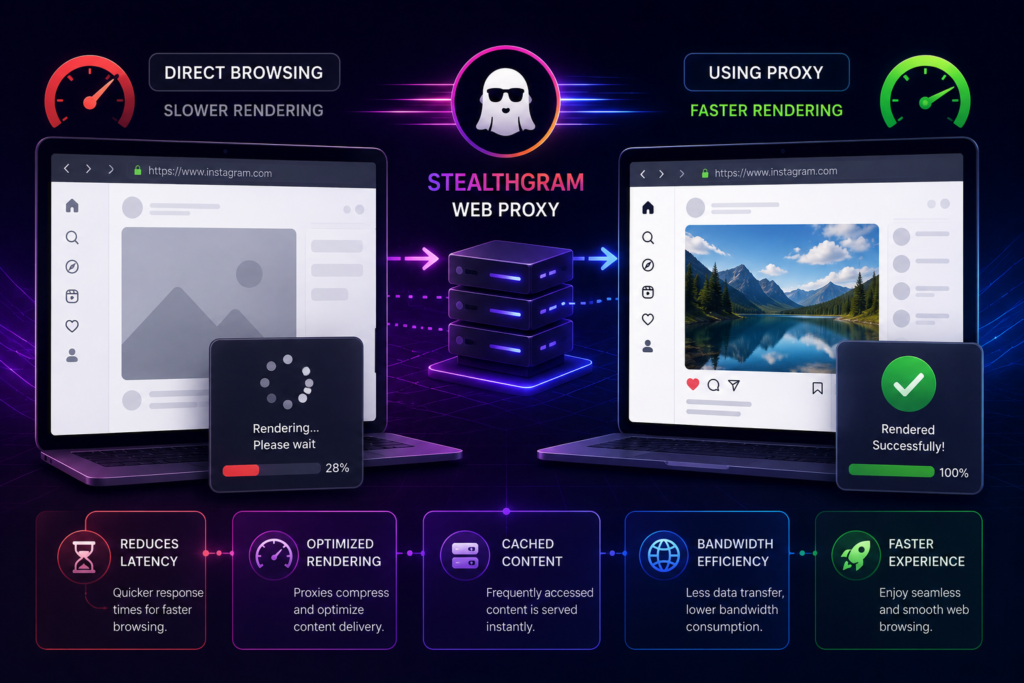

Optimizing web performance is the top priority for content creators, digital publishers, and market researchers in the modern internet ecosystem. When you need to extract visual trends or analyze competitor layouts without local tracking scripts, loading StealthGram inside your web browser provides a secure, cloud-isolated environment for clean media auditing. Operating as a remote proxy buffer, this web-based utility safely isolates your local device from aggressive data-harvesting algorithms.
However, loading modern, media-heavy social platforms often requires immense processing power due to bloated javascript files and tracking codes. When these bulky data packets interact with standard mobile browsers, users frequently experience lag, broken layout interfaces, or high battery drainage.
Fortunately, you can easily bypass these performance bottlenecks. Shifting your competitive intelligence workflow toward a cloud-based layout processing framework allows you to access essential creative marketing insights smoothly while keeping your local hardware running at peak operational speeds.
The Technology Behind Server-Side Image Compression
To understand why a dedicated web proxy boosts rendering performance while protecting digital privacy, it helps to look under the hood of modern network pipelines. Every time your browser opens a standard platform link, it must download and compile hundreds of individual tracking scripts.
Using the remote cloud servers of StealthGram completely restructures this resource-heavy data journey into a clean rendering sequence:
[Raw Platform Code + 40 Tracking Scripts]
                   │
                   ▼
       [StealthGram Cloud Node]
(Strips Heavy Scripts & Compresses High-Res Media)
                   │
                   ▼
      [Lightweight HTML Layout]
                   │
                   ▼
       [Your Local Screen Screen]
By filtering out the tracking scripts before they ever reach your device, the remote server dramatically reduces the amount of data your phone or computer has to process. This specialized cloud rendering process is exactly why premium web proxies deliver exceptionally fast load speeds compared to running native social media applications on older hardware.
2 Crucial Browser Configurations for Maximum Rendering Speed
If you ever encounter a frozen screen layout or an endless loading wheel while utilizing the cloud portal, your local browser is likely struggling to display the remote compressed data streams. You can instantly resolve these software conflicts by executing these two practical device adjustments:
Toggle Hardware Acceleration Settings
Modern internet browsers use hardware acceleration to offload complex graphic rendering tasks from your main processor onto your device’s graphics card. However, if your graphics driver encounters a temporary software mismatch with modern web layouts, the entire webpage can freeze into a solid white background. Access your browser’s advanced settings menu, search for system performance, and toggle the hardware acceleration switch. Making this adjustment allows StealthGram scripts to render flawlessly using your system’s core processing units.
Clear Corrupted Local Document Object Model (DOM) Cache
Every single time you visit an interactive web utility, your system saves localized layout tokens and script fragments to ensure faster load times during your next session. If these temporary cache files become corrupted during a network drop or a browser update, the rendering engine will fail to load new data streams. Open your application privacy panel, select “Clear Browsing Data,” and wipe your temporary web cache. Starting fresh forces the browser to download the latest server-side scripts, allowing StealthGram to display media grids instantly.
Why Media Agencies Prefer Cloud Utilities Over Native Applications
Choosing an isolated, web-based proxy over a downloadable third-party utility application is a massive strategic advantage for maintaining a secure and productive digital asset portfolio. Downloadable executable files frequently include invasive background trackers that continuously harvest local hardware information, clog your storage drives with junk cache, and degrade your operating system’s lifespan.
By routing your daily competitor audits through StealthGram, you keep your local registry clean, fast, and organized. Creative teams can safely monitor fast-moving industry aesthetics, track trending promotional video hooks, and build secure visual swipe files within a single browser tab without cluttering device memory or risking critical corporate data leaks.
Final Thoughts
Maintaining your digital data privacy while auditing high-converting content trends should never force you to compromise on your smartphone or laptop’s rendering performance. While standard browsing methods expose your corporate IP networks to heavy script tracking and system lag, secure web-based proxies deliver a high-speed, zero-risk alternative. By implementing the optimized, script-filtering architecture of StealthGram into your standard content curation routine, you can seamlessly gather valuable creative insights, bypass restrictive authentication gates, and keep your business market research fully confidential.





Pingback: StealthGram Mechanics: Neutralizing Advanced Tracker Fingerprint
Pingback: StealthGram: How to Browse Public Social Feeds Without Data