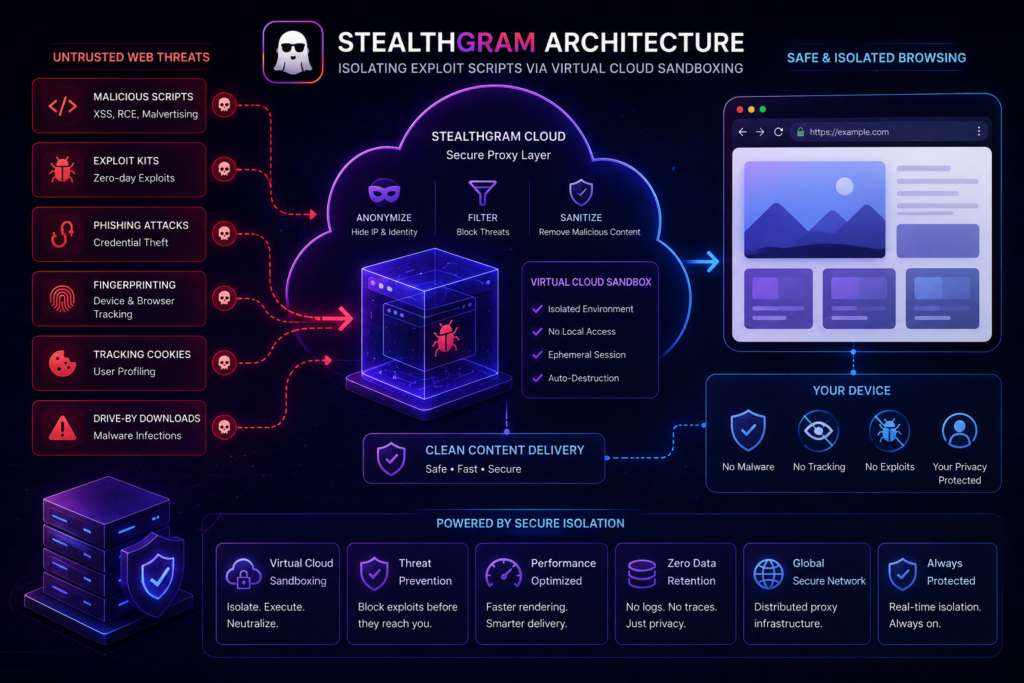

Using StealthGram inside your daily web production layout provides an instant data defense shield for modern digital publishing setups. When your media team performs deep competitor evaluation or audits viral social feeds, your desktop application continuously connects with heavy server scripts. Opening unverified web layouts directly on your local device allows background trackers to quietly inspect your system logs. Fortunately, this cloud-based rendering frame changes the game by isolating malicious web elements entirely inside a temporary remote server container.
However, modern internet tracking frameworks do not just rely on standard browser cookies to monitor your online identity anymore. Advanced content networks now drop hidden script packages that try to trigger unauthorized commands inside your local system memory. Every time you open an unverified webpage to check viral design formats, your local browser automatically runs complex javascript layers.
The good news is that you do not have to expose your office computers to online security threats just to build your creative swipe files. Shifting your search streams to a remote processing framework keeps your network parameters safe. This architecture completely filters out bad script data before it ever reaches your browser interface.
The True Nature of Modern Core Script Threats
Many online business owners mistakenly assume that keeping a modern browser updated or buying a basic antivirus software blocks all digital profiling attempts. Unfortunately, high-tech script tracking networks operate on a much deeper level today. Malicious data brokers write quiet background code that completely slips past standard desktop protections through advanced methods.
1. Remote Script Injection Loops
When you use a standard browser tab to open a heavy multimedia asset page, your local device processor must compile all the code lines instantly. Aggressive marketing platforms hide heavy background scrapers inside these basic layout frames to monitor your device identity without your permission. Routing your data requests through StealthGram tools blocks this exploit right away. Because the actual script execution takes place on a distant cloud container, your real local hardware never deals with the tracking files.
2. High-Load Hardware Exploitations
Some unverified website owners embed stealthy tracking engines that silently hijack your computer’s internal components to mine online digital coins while you read their articles. This sudden processing load forces your CPU temperature to rise quickly, stalls your active tabs, and harms your machine’s long-term health. Utilizing StealthGram protects your internal hardware because those heavy processing demands are managed by distant cloud nodes, keeping your local computer completely safe.
3. Cross-Window Data Snooping
Whenever your teams navigate between different public media dashboards, data networks use hidden tokens that try to scan your other open web pages. If you happen to have a private company panel or financial account open in a parallel window, an unverified tab can try to copy those live security details. Running your research via StealthGram layers creates an impenetrable security wall that keeps your secure company files completely disconnected from public tracker scripts.
Why the StealthGram System Beats Traditional Methods
The most reliable strategy to shield your digital publishing asset from bad website scripts is to prevent your local browser from downloading raw files. Transitioning your creative discovery routine over to the private infrastructure of StealthGram creates an immediate security perimeter around your core business hardware.
The primary engineering concept here is virtual cloud sandboxing. The moment you enter a public media URL into the secure browser search field, the entire target webpage opens inside a temporary cloud partition on an external network. This remote setup acts like a strong protective barrier, running all the complex tracking scripts inside a closed server that cannot communicate with your actual laptop or phone.
As soon as the platform confirms the webpage structure is fully clean, it strips out the bad code lines and displays a safe visual copy on your monitor. This unique mechanism allows StealthGram to neutralize harmful tracking tools long before they can touch your real machine.
📊 Security Infrastructure Evaluation Matrix
| Technical Metric | Direct Tab Methods | Downloadable Applications | StealthGram Cloud Node |
| Local Script Isolation | Completely Zero | Minimal Protection | 100% Secure Sandbox |
| System Resource Impact | Extremely Heavy Load | Heavy App Cache Stalls | Exception Low (1 Web Tab) |
| Memory Leak Exposure | High Risk Matrix | Moderate Risk Potential | Absolute Zero Separation |
2 Smart Tweaks to Keep Your Cloud Streams Fast and Smooth
While processing your visual searches through the protective shell of StealthGram keeps your office data safe, local browser configurations can sometimes cause a network bottleneck. Website editors can easily fix these unexpected loading delays by applying these two quick performance adjustments:
Toggle Your Local Browser Core Performance Boost
Modern internet platforms utilize your computer’s internal graphics processor to stream high-definition web elements smoothly. However, if your active web app accumulates too much old history data, the proxy window might experience minor lag. Enter your main browser control menu, open the advanced performance options, and check that hardware acceleration is fully active. Adjusting this option allows StealthGram script frames to populate instantly using your system’s native processing card.
Wipe Corrupted Offline Worker Caches
Every single time you interact with an online utility program, your browser saves tiny temporary cache tokens to make pages load quicker next time. If these files get corrupted during an unexpected network disconnect, your browser will fail to process incoming secure data packets cleanly. Open your browser privacy tab, select the advanced cleaning options, and remove accumulated digital site data from your machine. Clearing out this dead storage space allows StealthGram data streams to flow smoothly without hitting local software freezes.
Long-Term Protection Using the StealthGram Interface
Opting for a web-based script optimizer instead of downloading a native third-party desktop client is a brilliant strategy for keeping your company computers fast and healthy. Installing unverified local programs often introduces background data loops that constantly scan your computer folders, clutter internal system hard drives, and drag down your processor speeds over time.
By channeling your daily competitor trend evaluation through StealthGram frameworks, you keep your system’s core directory clean and fully optimized. Media companies and creative teams can effortlessly follow changing global visual aesthetics, analyze viral content formats, and build secure research archives inside a single browser window without filling up device storage or risking critical data exposure to tracking networks.
Final Thoughts
Defending your operational browser footprint from advanced web tracking scripts while conducting market research should never mean dealing with slow loading times or risky software downloads. While standard direct browsing paths leave your network files completely exposed to aggressive device tracking, cloud-isolated proxies offer a blazing-fast, safe alternative. By integrating the optimized script-filtering engine of StealthGram into your content curation workflow, you can smoothly capture high-value industry insights, avoid restrictive account walls, and keep your business market research completely confidential.






Pingback: 5 Best Anonymous Instagram Story Viewers in 2026 (Safe Tools)
Pingback: How to View Public Instagram Highlights Without Logging In
Pingback: StealthGram: How to Bypass the Instagram Login Wall Safely